(WorldFrontNews Editorial):- Baoji, Shaanxi Jul 26, 2026 (Issuewire.com) – As heavy industrial sectors face growing pressure from rising raw material prices, stringent operational requirements, and global sustainability targets, engineering leaders are reassessing traditional material selection methodologies. High-performance alloys such as titanium, nickel, stainless steel, and specialty copper alloys offer exceptional resistance to corrosion, wear, and extreme thermal conditions, yet their high cost and supply chain volatility create substantial commercial hurdles. As a Global Leading Metal Composite Material Solutions Provider, TGTY delivers advanced metallurgical cladding engineering designed to bridge the gap between structural integrity and economic efficiency. Metal composite materials permanently bond high-performance surface cladding with cost-effective structural base metals, combining superior surface resistance with high strength and lower lifecycle expenditure.
Navigating Modern Heavy Industry Challenges and Cost Optimization Trends
The global heavy industrial landscape–spanning petrochemical processing, marine engineering, mining, metallurgy, power generation, and chemical manufacturing–is undergoing a fundamental operational shift. Today, industrial operators must balance capital expenditure constraints with demands for longer equipment lifespans, minimal maintenance downtime, and increased energy efficiency. Solid alloy components, while historically effective in harsh environments, represent an increasingly unviable financial model for large-scale infrastructure projects. A significant portion of the material mass in solid alloy structures serves a purely mechanical load-bearing role, where expensive alloy properties remain unutilized within the core of the component.
This dynamic has accelerated the global adoption of metal composite material solutions across critical industrial equipment. Industry research indicates that transitioning from solid corrosion-resistant or wear-resistant alloys to clad composite structures can yield material cost savings between 30% and 70%, depending on component geometry and alloy composition. By optimizing material distribution–placing exotic alloys exclusively where chemical attack or mechanical wear occurs, while utilizing carbon or low-alloy steel for structural load support–heavy industry operators maintain total operational safety while drastically lowering total cost of ownership.
Furthermore, environmental regulations and decarbonization directives are driving industrial manufacturers to reduce total raw material tonnage and minimize the carbon footprint associated with mining and refining rare metallic elements. High-efficiency metallic cladding technologies support these sustainability goals by conserving critical alloy elements while extending asset longevity under severe service conditions.
Core Advantages and Technological Innovations in Metal Composite Engineering
The foundational value of advanced metal composite materials lies in the metallurgical bond achieved between dissimilar metals. Unlike mechanical coatings or physical linings, which are susceptible to delamination, thermal fatigue cracking, and subsurface oxidation under cyclic pressure, metallurgical bonding creates an atomic-level interface. This ensures continuous load transfer, uniform thermal conductivity, and structural performance under extreme thermo-mechanical stresses.
Engineered through controlled explosive welding, hot roll bonding, cold roll bonding, and automated overlay cladding techniques, advanced metal composites exhibit high shear strength and resistance to interfacial peeling. These metallurgical processes preserve the specific physical characteristics of both substrate and cladding layers:
- Structural Base Materials: Heavy-gauge carbon steel, alloy steel, or structural aluminum provide high tensile yield strength, impact toughness, excellent weldability, and structural stiffness at lower baseline costs.
- Surface Cladding Layers: Titanium, nickel-based superalloys, stainless steels, copper alloys, or wear-resistant bimetals deliver targeted resistance to pitting, crevice corrosion, stress corrosion cracking, erosion, and high-temperature oxidation.
By integrating precise metallurgical bonding controls with custom geometric shaping, industrial equipment designers can eliminate structural redundancies, optimize component wall thickness, and simplify downstream fabrication and field welding procedures.
Heavy Duty Industry Applications and Practical Case Studies
To demonstrate the practical economic and technical benefits of engineered composite materials, industrial applications across severe operating environments highlight the versatility of bimetallic and multilayer bar products.
Double-Layer Metal Composite Bar Solutions
In mechanical power transmission, chemical processing fluid conduits, and structural tie-rods operating in corrosive or abrasive environments, solid specialty bars frequently suffer from localized surface degradation or prohibitive material costs. The application of a Double-Layer Metal Composite Bar offers a highly reliable alternative. By metallurgically bonding an outer protective sheath–such as austenitic stainless steel or titanium–onto an inner high-strength carbon steel core, the composite bar achieves full structural load capacity while insulating the inner core from aggressive media.
This design is widely applied in chemical agitation shafts, marine propeller shafting, valve components, and underground mining support systems. Operators benefit from a drastic reduction in initial raw material procurement expense, alongside extended maintenance intervals and simplified field repair procedures.
Multilayer Metal Composite Bar Engineering
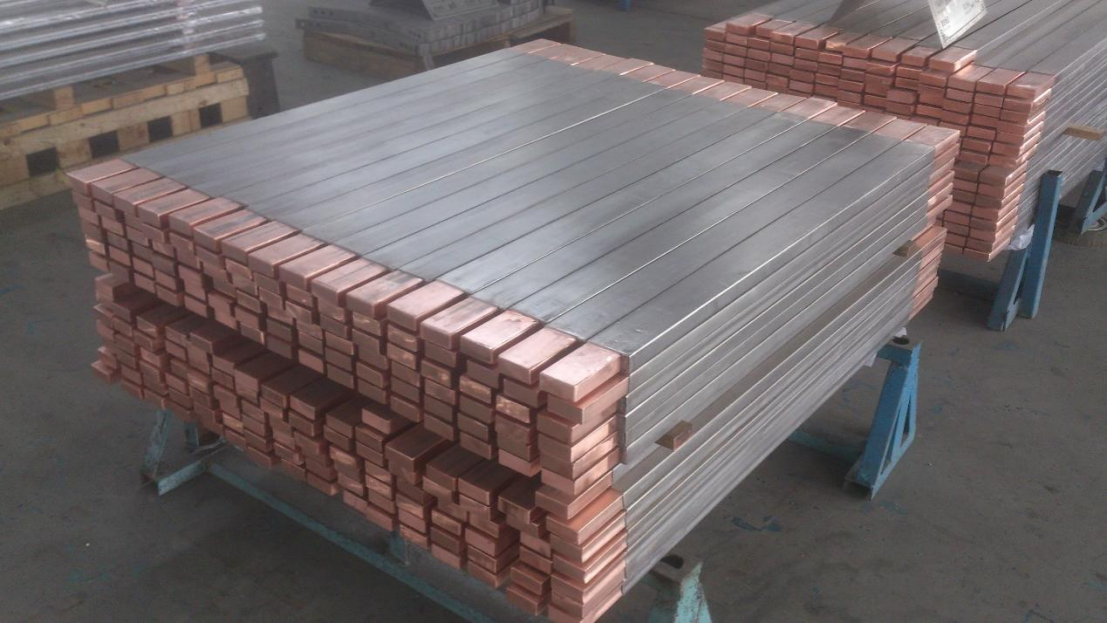
For ultra-demanding environments requiring multi-functional performance characteristics–such as combined thermal resistance, electrical conductivity, corrosion defense, and extreme mechanical strength–single-clad systems may not fulfill all engineering criteria. In these critical scenarios, Multilayer Metal Composite Bar technology provides an optimized multi-tiered material structure.
By combining three or more distinct metallic layers (for example, copper cores for maximum electrical/thermal conductivity, carbon steel intermediate layers for structural rigidity, and nickel or stainless steel outer layers for environmental protection), multilayer bars deliver customized physical behavior that cannot be achieved by any single solid alloy. Applications include heavy-duty electrolytic processing busbars, high-current industrial grounding conductors, heat exchanger components, and high-wear mineral processing equipment. The multi-tiered interface effectively dissipates mechanical shock waves and prevents micro-crack propagation, ensuring continuous operational reliability under variable thermal and mechanical loads.
TGTY’s Comprehensive Value Proposition for Heavy Industry Partners
As heavy industries continue to modernize, the selection of engineered material solutions serves as a direct driver of corporate competitiveness. TGTY integrates materials research, precision bonding engineering, strict testing protocols, and tailored manufacturing to support global engineering, procurement, and construction projects.
By offering fully customized metal composite plates, pipes, bars, and complex structural shapes, TGTY enables clients across the globe to overcome the financial constraints of exotic alloy procurement without compromising on safety or compliance with international standards. Comprehensive non-destructive testing, ultrasonic bond verification, mechanical tension/shear evaluations, and microstructural analysis ensure that every composite product meets stringent operational requirements prior to deployment.
Through continuous innovation in metallurgical composite processes, heavy industry operators can achieve a sustainable balance between capital discipline, structural durability, and long-term operational excellence.
For more information regarding TGTY’s full line of clad metal solutions and custom engineering capabilities, please visit: https://www.tgtiindustrial.com/
This article was originally published by IssueWire. Read the original article here.