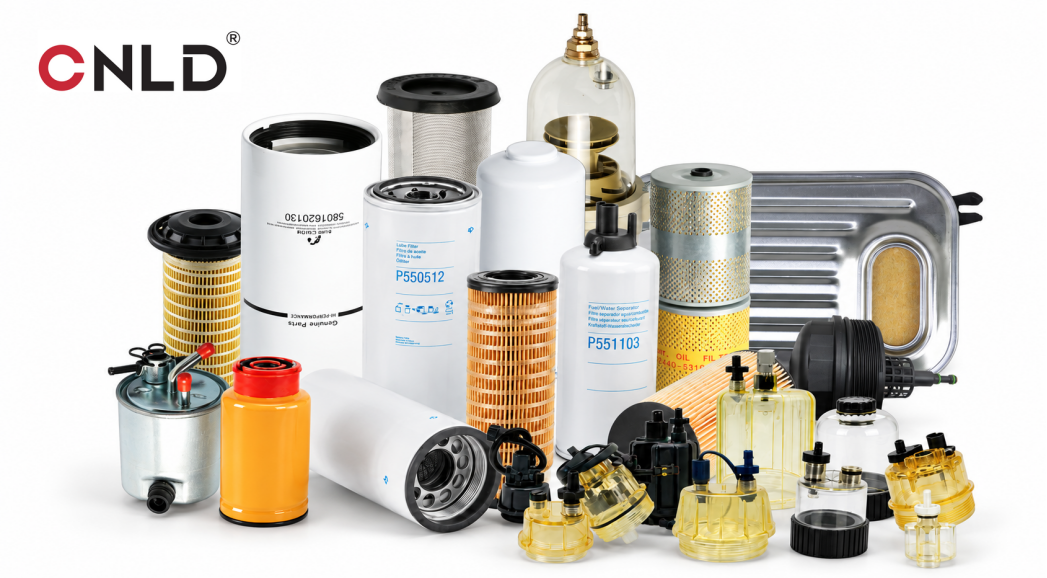
(WorldFrontNews Editorial):- Wenzhou, Zhejiang Sep 10, 2026 (Issuewire.com) – A practical guide to application fit, particulate performance, water separation, validation, traceability, quality systems and supply capability
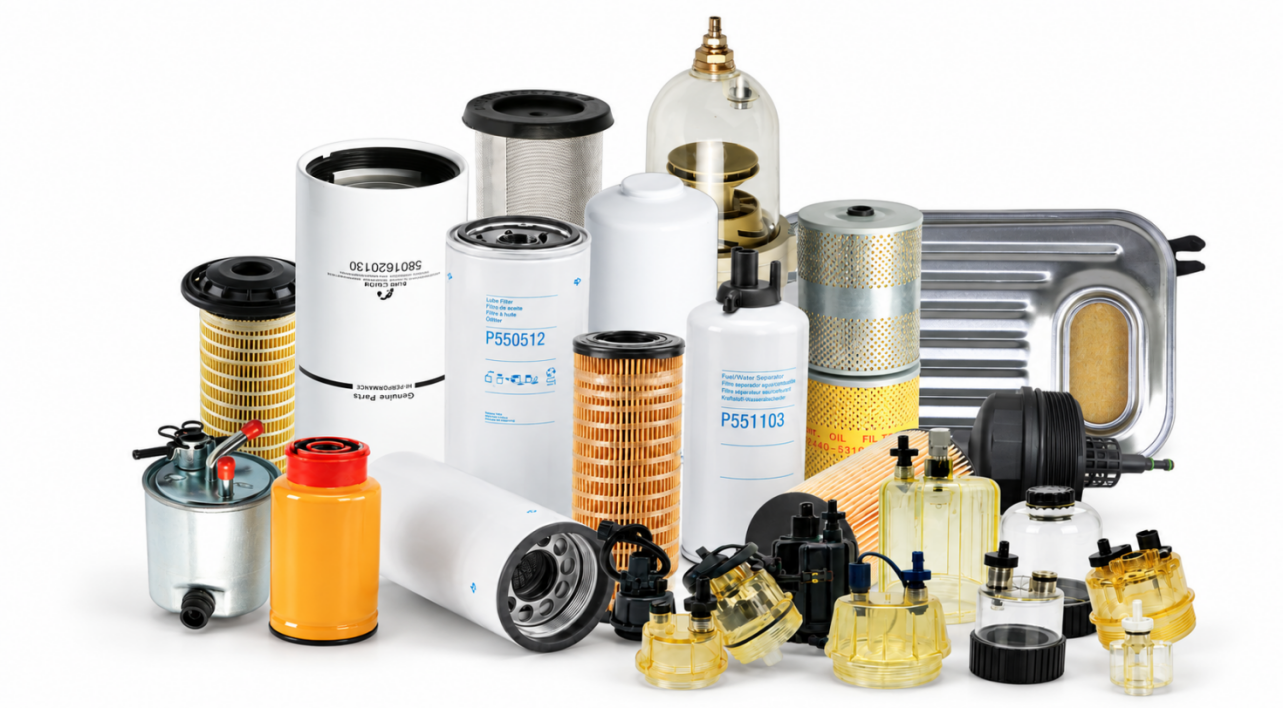
Selecting a fuel-filter manufacturer for modern diesel systems cannot be reduced to a micron claim, a cross-reference match or a quality certificate. A filter may fit the mounting head but still miss the required flow, sealing, particulate capacity, water-separation performance, material compatibility or service-life target.
For importers, distributors, private-label brands and heavy-equipment parts buyers, supplier approval should connect seven types of evidence: application definition, product drawings, test results, manufacturing controls, traceability, certified scope and supply capability.
Buyer rule: ask what was tested, by which method, on which product number and revision, under what conditions, and against which acceptance criteria.
1. Can the Supplier Confirm the Exact Application and Fit?
Cross-reference data is useful for identifying candidates, but it is not sufficient for product approval. Before quotation or sampling, the supplier should confirm the equipment or vehicle, engine, filter location, rated flow, mounting thread, sealing diameter, overall dimensions and any drain, priming-pump, heater or water-in-fuel sensor interface.
Useful evidence includes:
- the OE number and all proposed cross-references, with unresolved conflicts identified;
- a controlled drawing or dimensional report covering threads, gaskets and connection interfaces;
- a physical-sample comparison when drawings or application data are incomplete;
- a documented agreement on who is responsible for final application validation.
2. Are Particulate Performance Claims Defined Clearly?
A statement such as ’10 micron’ is incomplete unless it identifies the efficiency at that particle size, rated flow, test fluid, initial pressure drop, contaminant capacity and test method. Buyers should request a report that identifies the tested part number, construction, revision, test date and result rather than relying on a catalogue rating alone.
ISO 19438:2023 provides a multi-pass procedure for evaluating particulate removal characteristics, contaminant capacity and differential pressure for diesel and petrol fuel filters. It should not be described as a water-separation test, a durability test or proof of performance under every field condition.
3. How Is Fuel/Water Separation Performance Verified?
Particle capture and water separation are different functions. The relevant method depends on the separator location, droplet condition, fuel formulation, temperature, rated flow and customer requirement. A high particulate-efficiency result does not automatically prove water-removal performance.
Reference
What it evaluates
What buyers should not assume
ISO 19438:2023
Particulate removal, contaminant capacity and differential pressure in a multi-pass fuel-filter test.
It does not establish water-separation efficiency or a universal pass/fail grade.
ISO 16332:2018
Fuel/water separator comparison testing using fine droplets for pressure-side units and coarse droplets for suction-side units.
A laboratory comparison does not guarantee identical results in every fuel, temperature or installation.
SAE J905
Standardised bench methods for selected fuel-filter performance, integrity and environmental characteristics.
The method itself does not define the customer’s minimum performance targets.
SAE J1839
Removal of undissolved coarse water droplets under controlled laboratory conditions.
It should not be presented as a fine-emulsion or dissolved-water removal test.
A supplier should claim compliance with a method only when the report identifies the representative product, configuration, test conditions and results. Type-validation testing must also be distinguished from routine batch inspections.
4. Have Structural Integrity and Material Compatibility Been Validated?
Fuel filters and fuel/water separators generally protect the high-pressure pump and injectors from the low-pressure fuel-supply circuit; they are not normally exposed to common-rail injection pressure. The validation plan should therefore reflect the actual mounting position and the customer’s specified pressure, temperature, vibration and fuel conditions.
Depending on the design and application, buyers may request:
- leakage, proof-pressure, hydrostatic-burst and pressure-pulsation testing;
- vibration, thermal-cycle and service-life validation;
- fuel, biodiesel, water and temperature compatibility for media, adhesive, plastic and elastomer materials;
- fit and sealing checks for threads, gaskets, end caps, centre tubes, bowls, drains and sensor ports;
- packaging and transport checks for complete filters and fragile transparent components.
5. Does the Quality-System Certificate Cover the Actual Site and Process?
ISO 9001 and IATF 16949 are quality-management-system standards. They can support confidence in process control, traceability, supplier management, corrective action and change control within the named scope, but they do not by themselves prove the filtration efficiency, water-separation performance or service life of a specific filter.
The buyer should verify the legal entity, manufacturing address, certification body, current validity, certified scope and any exclusions. A certificate held by one affiliated company or site should not automatically be attributed to every related company or production location.
Certificate holder and site
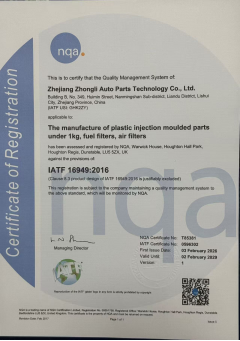
ZHEJIANG ZHONGLI AUTO PARTS TECHNOLOGY CO., LTD. | Lishui, Zhejiang, China
Certified scope
Manufacture of plastic injection-moulded parts under 1 kg, fuel filters and air filters
Certificate details
NQA T85381 | IATF 0596302 | USI GHK2ZY | 3 February 2026-2 February 2029
Scope limitation
Clause 8.3 product design is justifiably excluded. Engineering capability must be evidenced separately.
Figure 1. IATF 16949:2016 certificate supplied for Zhongli’s Lishui manufacturing site. Certificate validity should be reconfirmed during supplier approval.
6. Can the Supplier Trace Materials, Production and Engineering Changes?
A test report describes a defined sample; traceability and change control help maintain the approved condition in production. Buyers should be able to connect an incoming filter to its material lots, component batches, mould cavities, assembly records and inspection results.
A practical review should cover:
- filter-media specification, polymer grade, steel, adhesive and seal-material records;
- supplier certificates of analysis and incoming-inspection results;
- mould-cavity, production-date and finished-batch identification;
- process flow, PFMEA, Control Plan, measurement-system checks and calibration status;
- engineering-change approval, complaint containment and corrective-action records.
7. Can the Manufacturing Network Support the Required Range and Volume?
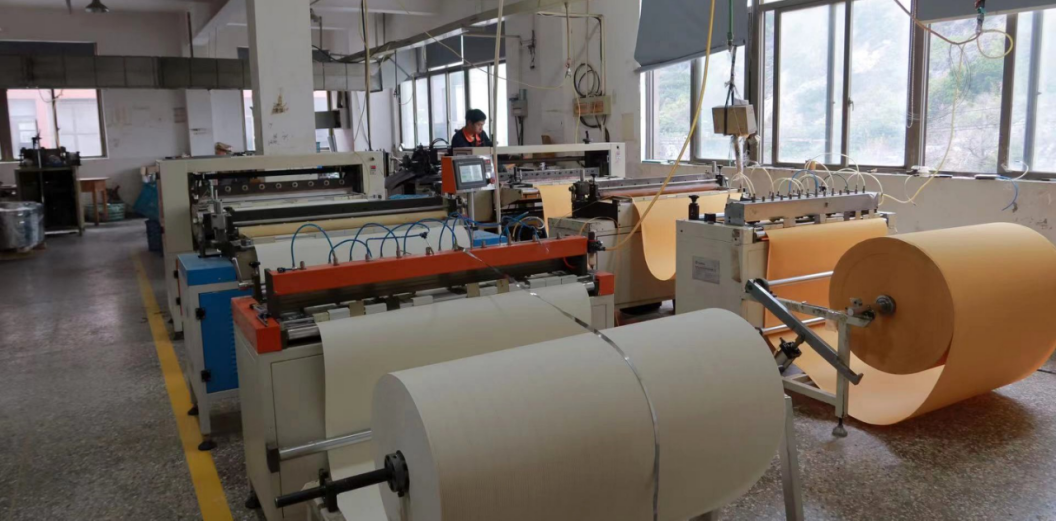
WENZHOU ZHUOCHEN AUTOMOTIVE INDUSTRY CO., LTD. coordinates OEM/ODM projects, export communication and customer programmes through two affiliated manufacturing companies. WENZHOU LANGDI AUTO PARTS CO., LTD. manufactures complete filters, while ZHEJIANG ZHONGLI AUTO PARTS TECHNOLOGY CO., LTD. specialises in filter plastic components. They are affiliated companies, not subsidiaries.
For diesel fuel-filter programmes, this structure can coordinate filter elements, metal assemblies, plastic housings, caps, transparent bowls, drains and sensor interfaces within one commercial and technical workflow. Buyers should still approve the exact legal entity, production site, product drawing, validation plan and control requirements for each programme.
25,000+ m²
Combined area of two Zhejiang production bases
350,000/month
Finished-filter capacity
2,000,000/month
Plastic-component capacity
40+
Haitian injection-moulding machines
8,000+
Cross-reference numbers across the wider portfolio
30+
Utility-model patent certificates
Capacity figures demonstrate scale; they do not replace product-specific drawings, validation reports, control plans, delivery commitments or contingency arrangements.
Documents Buyers Should Request Before Approval
- a current quality-system certificate showing the legal entity, site, scope and validity;
- the approved drawing, OE/cross-reference matrix and application confirmation;
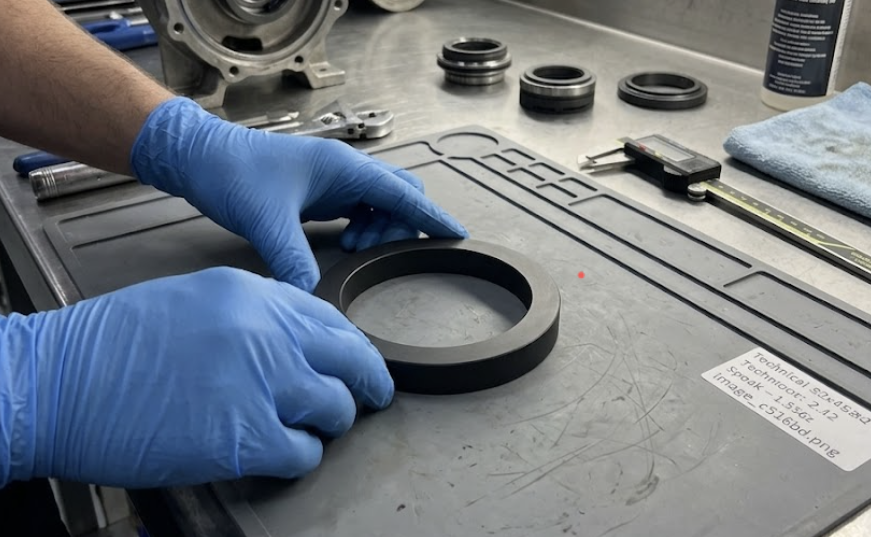
- a dimensional inspection report for threads, seals and connection interfaces;
- particulate-efficiency, capacity and pressure-drop reports where required;
- water-separation results using the relevant droplet and installation conditions;
- leak, burst, pulsation, vibration, thermal-cycle and fuel-compatibility evidence as applicable;
- material specifications, batch COAs and traceability examples;
- Process Flow, PFMEA, Control Plan and measurement-system evidence for OEM/ODM programmes;
- capacity, lead-time, mixed-reference, packaging and contingency information;
- the complaint, containment, corrective-action and engineering-change procedures.
Conclusion
A reliable fuel-filter manufacturer should be evaluated through connected evidence, not isolated claims. Application data confirms fit; product testing evaluates defined performance; quality systems support repeatable processes; traceability and change control protect the approved condition; and capacity planning supports long-term supply.
Send us 10-20 current, high-volume or difficult-to-source fuel-filter references, together with OE numbers, drawings, samples or application details. Our team can prepare a no-obligation review covering fit, critical dimensions, available validation evidence, MOQ, lead time and OEM packaging.
Ivan Zhu | Sales Manager
WENZHOU ZHUOCHEN AUTOMOTIVE INDUSTRY CO., LTD.
WhatsApp: +86 139 6880 6352 | Email: [email protected] | www.zhuochen-autoparts.com
Reference Sources
This article was originally published by IssueWire. Read the original article here.